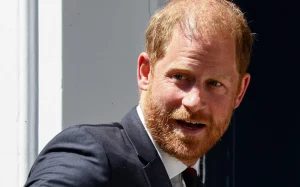
For this moment, just this moment only, the world is divided into those who know the story behind the headline and those who do not. For those who don’t know, Mr Mischief is Harry Sussex a.k.a. Prince Harry. The rather racy wording refers to messages exchanged between Harry and another which featured in the case brought by Harry and others, against Associated Newspapers (ANL) In summary, the Claimants, Harry, Sadie Frost, Liz Hurley, Baroness Lawrence, Sir Elton John. David Furnish and Sir Simon Hughes, all claim that articles published by the Daily Mail and sister news outlets’, were based on information obtained by illegal means. To put this in to context, the claim against The Mail was the third in Harry’s campaign against the British Press. As the BBC report of 7th. July states, ‘In previous legal battles with the press, Prince Harry won 15 claims in his case against Mirror Group Newspapers and separately received “substantial” damages and an apology in a settlement with the publisher of the Sun.’ Harry saw himself as the ‘Dragon Slayer’ fighting against the establishment British Press on behalf of ……….. well, the establishment. With the possible exception of Baroness Lawrence, all of the other claimants were either wealthy celebrities or, establishment figures, including Harry himself.

I would like to address two things before I go any further. The first is that I will limit this essay to Harry’s claims and not cover some of the issues mentioned by Mr Justice Nicklin’s 436 page judgement. (see link below) It makes very interesting reading but it is not within the scope of this essay. The second is to declare my bias against the main claimant. If you have suffered through any of my other blogs you will soon be aware that I consider Harry to be a spoilt child. I agree that this may be an over simplification but again, this is not the essay to debate that. If proof were needed for my opinion, then look no further than his actions in this case. For a person so protective of his right to privacy, it seems somewhat hypercritical for him to override the same rights of others when they can be exploited in interviews on Netflix, Oprah, Spotify, BBC, Vanity Fair et al. In Paul Dacre’s words,
“There isn’t a laundry in the cosmos big enough to wash all the dirty linen he has aired about his own family. For him to complain about HIS privacy being invaded takes not just the biscuit, but the whole tin.” Paul Dacre editor-in-chief of DMG Media. Daily Telegraph 10/07/26
To get back to the case. The claimant’s case rested on two legs. The first is that articles printed by the Mail contained information that could only have been obtained by illegal means. The second leg relates to a certified witness statement made by Gavin Burrows, the claimant witness, which, “alleged an array of lawbreaking on behalf of the publisher, including bugging, phone hacking, landline tapping and the “blagging” of private records and medical information.” The Guardian
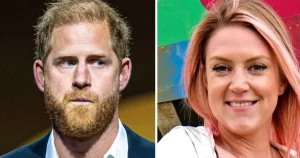
If we take the first leg of Harry’s case, it is important to understand the elements required to win. As the BBC reported, “Because this was a civil case, the “burden lies on each claimant to prove the facts”, and establish each part of their claim “on the balance of probabilities”. In non-legal speak, this means the claimants had to show that an event was more likely to have occurred than not. BBC 07/07/26. When we apply the “balance of probabilities” test to Harry’s testimony we see an immediate weakness. “Giving evidence in court, he [Harry] insisted that his friendship group was not “leaky” and that personal information could only have come from hacking. But specific evidence was scarce.” The Daily Telegraph 07/07/26 The problem is that at this time (pre Megyn) Harry was part of a hard drinking, hard partying social class of the right sort of people. Just applying the probability test to a likely scenario. Is it probable that a ‘fuelled up’ young man would use his friendship with the Prince to impress an attractive woman at a party? Mr Sherbourne, invoked the balance of probabilities argument when Judge Nicklin questioned the lack of evidence to prove wrongdoing by the Mail. Sherbourne gave an example of when a valuable watch was stolen from a safe and subsequently found in another’s possession. He argued that, “It should then be up to the defendant, he said, to prove that the watch had been sourced legitimately.” The Guardian, 07/07/26. It seemed to argue an odd reversal of the roles where the accused has to prove his innocence. Judge Nicklin disagreed with Mr Sherbourne’s attempt to explain the lack of evidence supporting the claimants case. “Mr Justice Nicklin, who has questioned Sherborne’s approach throughout the trial, said the notion sounded “perilously close” to reversing the burden of proof on to the defendant.” The Guardian,31/03/26 As it turned out, we did not have to wait for Mr Shelbourne to make the connection between the Mail and the source of the stories. All along Katie Nicholls and other Mail journalists had claimed that their sources had mainly been loose-lipped friends, publicists and press offices. Harry denied any connection with the press but when his association with the Mail journalist, Charlotte Griffiths was revealed, his earlier assertions that he despised journalists and would have nothing to do with them was put into some doubt. It was here that we meet the flirtatious, Mr Mischief who carried on a correspondence with this Mail Journalist for sometime.

All the Mail had to do was to prove that it was more likely that information was obtained from Harry’s circle ,than by illegal means. This Harry managed to do by proving that his circle leaked from the top.
There were other sources for the stories, including Jack Straw, the Home Secretary at the time of the public inquiry over Stephen Lawrence’s murder. Harry believed that he only had to prove illegal information gathering for one of the 14 articles he submitted to the court. On the other hand the Mail had demonstrated that there were many sources available to them and that it was more likely that they obtained information from Mr Mischief and others, than not.

The second leg, on which Harry’s claim was built, was far more substantial. He had an affidavit, supported by a witness who would testify that he was, “… working with an “ex-army guy” to place devices in maintenance holes and junction boxes and bugging cars, as well as hacking celebrities and those close to them, including Elton John’s gardener.” The Guardian 07/07/26. The witness was a Private Investigator, named Gavin Burrows. He was crucial to the claimants case for two reasons. First, he was the only witness that could connect the Mail with the offenses claimed. The second, is that his statement was used to persuade the likes of Baroness Lawrence to join the case against the Mail. This was important as it gave gravitas to the otherwise celebrity heavy claimants. It is no accident that the case is listed as Baroness Lawrence and Others v Associated Newspapers Limited. A lot depended on Gavin Burrows testimony. The problem for Mr Sherbourne, Harry and the others came in an explosive statement from Mr Burrows before the trial began. He said that he never did any of the illegal acts specified in the witness statement produced by the claimants and that the statement itself, was a forgery! Mr Shelbourne must have felt the ground give way underneath him. He tried to block Burrows testimony via video but the Judge reminded the lawyer that Burrows was his witness. In the event the Judge found Burrows testimony, “argumentative, evasive, internally inconsistent and, at times, extraordinary”. The Guardian 07/07/26. The Judge had a special mention for the claimants lawyer, “ who signed off the disputed statement, the celebrity solicitor Anjlee Sangani, had not witnessed Burrows signing it, delegating that task to Johnson. Nicklin added that Sangani had shown a “serious error of professional judgment” in signing off the statement. The Guardian 07/07/26

Having demolished Harry’s claim that his circle of friends would never associate with journalists, by associating with journalists himself, the first leg of his claim collapsed. The second leg, which was more critical to the claimant’s case, exploded in their faces, in an almost farcical way, when Burrows asserted that the affidavit was a forgery. At the closing of the trial, I believe that Mr Sherbourne and his clients still felt that they would get something from the Judge that might be claimed as a partial victory. This belief was bolstered by, not only the successes achieved by Harry in past cases but also by a lucrative culture of suing Newspapers over hacking. As Fraser Nelson wrote in the Times, claims against newspapers had reached almost industrial levels with £1.2 billion being paid out to 1300 claimants. Given the widespread practise of newspapers settling hacking claims out of court, all Mr Sherbourne had to do was to, ” … establish a culture of dark arts at the Mail” Times 07/07/26. In essence, claimants brought criminal acts of illegal information gathering to the civil courts, where there is a “lower evidence threshold.” They also expanded the concept of institutional guilt to mean that if one person, in an institution, is guilty of a criminal act, then in all probability, his colleagues could also be assumed to have offended. Mr Sherbourne relied on the Cardiff Newsagent Three case to support his argument. However, his argument was shot down by the Judge who ruled that there was no argument in law for contagious guilt. “This is what the judge finally rejected. If Reporter A hacked a phone, he said, it tells you precisely nothing about whether Reporter B did. No one — journalists or anyone else — can be found guilty by association. “Times 07/07/26 This belief was an important factor in bringing the case when, in retrospect, it seemed to have very little merit. To the claimants, however, they saw precedent in a tenuous link to the Cardiff case; they saw the Burrows affidavit; they believed that no one around them talked to the press and they believed that all journalist behaved in a deplorable manner.

In summary, we have seen the two legged support of the claimants case collapse. We have seen the guilty by contagion faux doctrine shattered. We have also seen Judge Nicklin, constantly bring the claimants back to the pleaded case. Sect 8 “They were not a public inquiry into the conduct of Associated generally. The Court therefore controlled the scope of the Claimants’ general case about Associate’s conduct and required the trial to focus on the pleaded issues.” Essentially, the case came down to one sentence, which the Judge addressed to Mr Sherbourne, “It is for you to demonstrate there has been a wrong.” Rosamund Urwin, 04/04/26, The Times In his judgement, Judge Nicklin found that none of the seven claimants had proved that, in any of the 97 documents submitted, the Mail had obtained the information illegally. He went to great lengths to say that suspicion was not enough but that the complaint had to be proved. Sect 7 “But suspicion, even where understandable, was not enough.
The Claimants had to prove that the information complained of had been obtained
unlawfully.” He went through each of the 97 documents submitted, rejecting the idea that guilt can be inferred from generalised complaints Sect 11 “The Court rejected the attempt to prove the claims by broad inference where there remained a legitimate and realistic possible lawful source pathway…” When weighing up the value of witness testimony he found the defendants believable but had some difficulties with the claimants team. We have already seen his comments concerning Anjlee Sanjana’s handling of Burrows alleged affidavit but he also had doubts about evidence gathering by Graham Johnson who’s testimony he described as, “shaped by reconstruction rather than reliable recollection”. the Telegraph 07/07/26 Johnson, who had previously been convicted of phone hacking, was connected to the Hacked Off lobby group that wanted to retry the Leveson enquiry with the aim of reducing Press freedom. The Judge had to constantly haul Mr Sherbourne back to the case in hand and dismissed any claims made in this respect. On a technicality, The Judged did not comment on, the apparent discrepancy in Harrys testimony about his relationship with the press, in particular Miss CG String. In general he rather mildly observed that Harry gave evidence that, “led him beyond giving factual evidence into advancing arguments on the issues” but in the end “has limited evidence to give on the contentious matters in dispute”. Guardian 07/07/26. There were questions about whether some of the claimants charges were time barred and the Judge referred to a “camouflage scheme” designed to falsely extend the six year time limit on bringing these complaints. There were questions concerning payments to the claimants witnesses, Gavin Burrows received £75k. And so on and so on and so on. There is enough content to make a good read at Christmas if anyone can rush a book out in time. The reason I have gone into this much detail is to give an idea of how much of this action was tied together with string and Sellotape. It was wrapped in scraps of paper sealed with, vindictiveness, revenge, spite, greed, narcissism, entitlement, stupidity and puppy dogs tails. The last word goes to Harry. “I’ve been told that slaying dragons will get you burned,” Caroline Davies, The Guardian 07/07/26. Well he got it half right. He was burned
Sources
Michael Savage, 07/07/26, The Guardian, An emphatic victory for the Mail: how a £50m privacy case unravelled in court, https://www.theguardian.com/media/2026/jul/07/mail-victory-50m-privacy-case-unravelled-court-associated-newspapers
Michael Savage, 31/03/26, The Guardian, An angry prince and leaky friends: key moments in the Daily Mail hacking trial,https://www.theguardian.com/media/2026/mar/31/key-moments-daily-mail-hacking-trial
Cachella Smith and Jamie Whitehead, 07/07/26, BBC News, Prince Harry loses High Court case against Mail publisher, https://www.bbc.co.uk/news/live/c932dy1p94wt?page=2 and https://www.bbc.co.uk/news/live/c932dy1p94wt
Judge Nicklin Verdict https://www.judiciary.uk/judgments/baroness-lawrence-and-others-v-associated-newspapers-limited/
Michael Savage,10/02/26, The Guardian, Lawyer did not see Gavin Burrows sign Mail phone-hacking confession, court hears, https://www.theguardian.com/uk-news/2026/feb/10/gavin-burrows-phone-hacking-confession-solicitor-anjlee-sangani-high-court
Rosamund Urwin, 04/04/26, The Times, Prince Harry v the Mail: will ‘Mr Mischief’ regret this £38m gamble?, https://www.thetimes.com/uk/royal-family/article/prince-harry-associated-newspaper-wr53w3vgs
Caroline Davies, 07/07/26, The Guardian, Prince Harry gets burned in his mission to ‘slay dragons’ of British media, https://www.theguardian.com/uk-news/2026/jul/07/duke-of-sussex-calls-legal-battles-with-british-media-his-lifes-work-phone-hacking-daily-mail
Fraser Nelson, 07/07/26,The Times, The Prince Harry case failed the basic test of the newsroom, https://www.thetimes.com/uk/law/article/fraser-nelson-prince-harry-phone-hacking-case-qzprstmz8
Victoria Ward, 07/07/26 The Telegraph, Prince Harry loses £50m phone hacking case against Daily Mail, https://www.telegraph.co.uk/royal-family/2026/07/07/prince-harry-loses-50m-phone-hacking-case-daily-mail-uk/